The connection between screens and sleep disruption is well-documented. Research from Harvard Medical School shows that blue light exposure within two hours of bedtime suppresses melatonin production by up to 85%, delaying sleep onset by an average of 90 minutes. But it’s not just the light—the mental stimulation from content, the endless scroll of information, and the dopamine hits from notifications keep your brain in a state of low-grade stress that directly opposes the physiological conditions needed for sleep.
The challenge is that screens have become our default decompression tool. After a demanding day, the passive consumption of content feels like rest—but neurologically, it’s the opposite. Your brain is still processing, still reacting, still engaged. Learning to wind down without a screen requires replacing this default with equally satisfying but physiologically calming alternatives. The goal isn’t deprivation—it’s substitution with superior options.
The Science of Screen-Free Wind-Down
Your brain needs a gradual transition from the beta waves of alertness to the alpha waves of relaxation, then the theta waves of pre-sleep drowsiness. Screens interrupt this progression by maintaining beta wave activity. The screen-free wind-down works by engaging activities that naturally induce alpha and theta waves without artificial light stimulation.
The Two-Hour Rule: A Realistic Framework
The “no screens two hours before bed” mandate sounds impossible—and for many, it is. A more realistic approach is the gradual fade: reduce screen intensity and interactivity as bedtime approaches. The last hour should be genuinely screen-free, but the hour before that can transition from active screen use (scrolling, emails) to passive screen use (watching a calming show with blue light filters on). This gradual reduction is more sustainable and still provides 80% of the benefit.
Screen-Free Wind-Down Activities: The Replacement Menu
The key to successful substitution is having a menu of appealing alternatives ready. When you’re tired, you won’t have the energy to “figure out” what to do. These options should be as easy as reaching for your phone—books on the nightstand, journal already open, tea bag pre-selected.
The Reading Reset
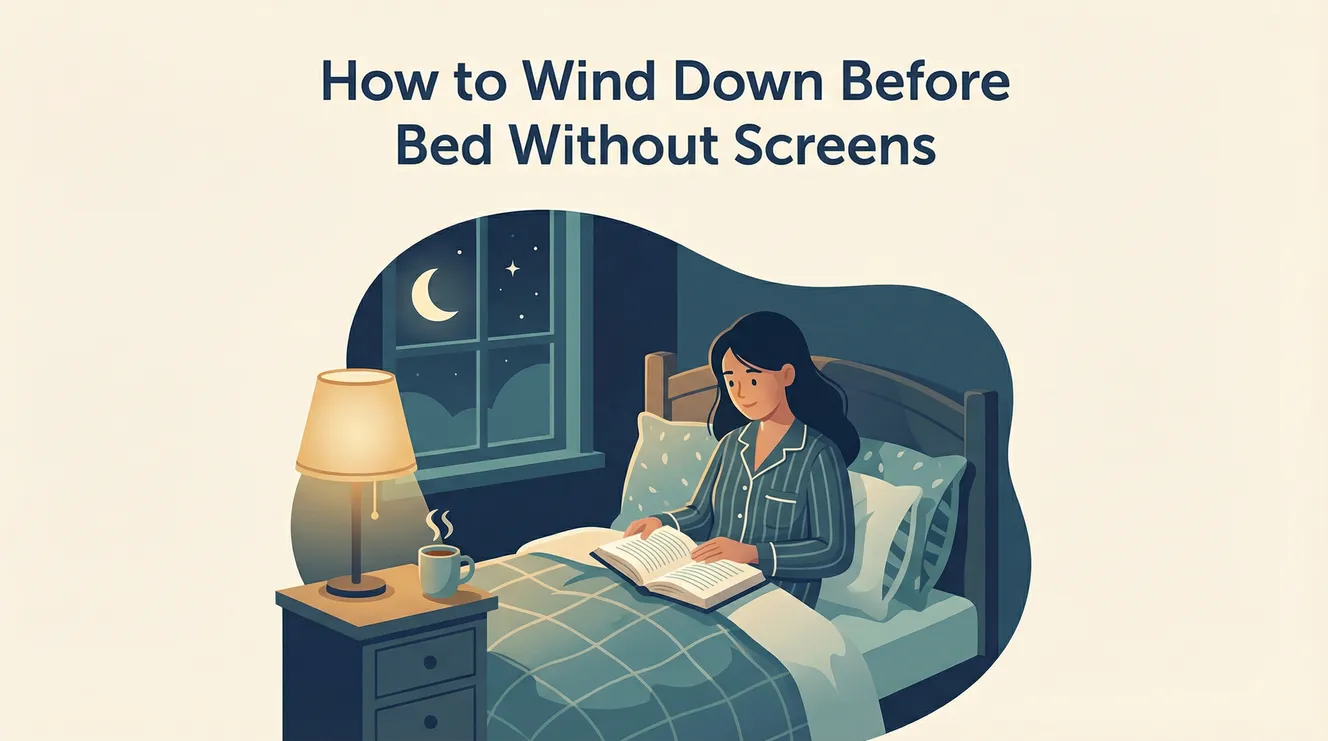
Physical books are the gold standard for screen-free wind-down. The tactile experience signals “rest” to your brain. Choose genres carefully: avoid thrillers or dense non-fiction that requires active processing. Instead, opt for:
Short story collections: Complete narratives provide closure, unlike the infinite scroll of social media. Literary collections offer emotional depth without requiring sustained attention.
Poetry: A single poem is a complete experience. The language is dense but brief, providing satisfaction without mental exhaustion.
Coffee table books: Visual-heavy books on art, nature, or photography provide engagement without demanding linear focus.
The Journaling Wind-Down
Journaling before bed does what scrolling tries to do—processes the day—but more effectively. The physical act of writing engages different neural pathways and provides closure. Try these specific formats:
The “brain dump”: Set a timer for 5 minutes and write everything that’s in your head—worries, to-dos, random thoughts. This externalizes mental clutter onto paper, freeing your mind for sleep.
Gratitude listing: Write three specific things from your day you’re grateful for. Research from Clinical Psychology Review shows this reduces anxiety and improves sleep quality more effectively than passive media consumption.
Tomorrow’s intention: Write one sentence about how you want to feel tomorrow. This creates a positive anchor point that your brain can focus on instead of cycling through worries.
The Breathing Reset
Breathing exercises directly activate the parasympathetic nervous system, signaling “rest” to your body. Unlike meditation apps (which keep you on a screen), these can be done autonomously:
4-7-8 breathing: Inhale for 4 counts, hold for 7, exhale for 8. Four cycles take 76 seconds and noticeably slow heart rate.
Box breathing: Inhale, hold, exhale, hold—all for 4 counts each. This is particularly effective for quieting a racing mind.
Nostril breathing: Close one nostril, inhale through the other, switch, exhale. This balances the nervous system and feels actively calming.
The Gentle Movement Sequence
Light stretching releases physical tension accumulated from sitting all day. Unlike vigorous exercise (which can be stimulating), gentle movement prepares the body for rest:
Child’s pose: Hold for 2 minutes. This compresses the abdomen and stimulates the vagus nerve, directly calming the nervous system.
Legs-up-the-wall: Lie with legs extended up a wall for 5 minutes. This improves circulation and signals to your body that it’s time to be horizontal.
Neck and shoulder rolls: These release tension that accumulates from forward-head posture while screen-using all day.
The Screen-Free Wind-Down Menu
15 minutes: Gentle stretching or yoga
20 minutes: Reading (physical book) or journaling
5 minutes: Breathing exercises
5 minutes: Herbal tea preparation and sipping
Total: 45 minutes of screen-free decompression
The Environmental Setup: Designing for Screen-Free Success
Your environment either supports or sabotages your screen-free intentions. The key is making the healthy choice the easy choice and the screen choice the one that requires effort.
The Phone Hotel
Create a dedicated charging station outside your bedroom—your “phone hotel.” This simple act removes the temptation and makes reaching for your phone a conscious decision requiring you to leave bed. Keep a physical book, journal, or magazine on your nightstand as the obvious replacement. The friction of getting up is usually enough to break the automatic phone-check habit.
The Lighting Gradient
Install dimmer switches or use smart bulbs that gradually reduce brightness and shift to warmer tones (2700K) in the evening. This mimics natural sunset and signals to your brain that evening is progressing. Sleep Foundation research shows that ambient lighting shifted from 3000K to 2700K two hours before bed can improve sleep onset by 25%.
The Soundscape Buffer
Use a white noise machine or fan to create a consistent sonic environment that masks the notification sounds from other rooms. This removes the audio temptation and creates a cocoon of calm. Gentle nature sounds (rain, ocean) can provide the background stimulation your brain craves without the content stress of podcasts or videos.
Handling the Transition: When Screens Feel Impossible to Quit
The first week without screens will feel strange, even uncomfortable. Your brain has been conditioned to expect that dopamine drip. Expect boredom, restlessness, and the phantom urge to check your phone. This is normal withdrawal.
The Gradual Fade Strategy
If going completely screen-free feels overwhelming, try this progression:
Week 1: No social media or work apps in the final hour. Passive watching only (Netflix with blue light filter).
Week 2: Last 30 minutes screen-free. Keep a book or journal visible as the obvious alternative.
Week 3: Full hour screen-free. Your brain will have begun adapting to the new routine.
The Accountability Partner
Partner with a household member or friend to establish screen-free bedrooms. Text each other at 9 PM: “Phone’s in the hotel.” This external commitment makes it harder to cheat. When you feel the urge to check your phone, you know you’ll have to explain it later.
The Morning Payoff: What Better Sleep Feels Like
After two weeks of screen-free wind-down, the benefits compound. You’ll fall asleep 20-30 minutes faster, wake up less during the night, and feel more refreshed in the morning. But the real transformation is mental: you’ll trust your ability to rest without external stimulation, breaking the dependency loop that kept you tethered to devices.
The Sustainability Factor
Unlike restrictive sleep hygiene rules that feel punishing, a screen-free wind-down becomes self-reinforcing. The deeper sleep and calmer mind create a positive feedback loop—you begin to crave the ritual because you associate it with how good you feel the next day. The screen-free hour transforms from discipline to luxury.
Your Evening Belongs to You, Not Your Feed
The hour before bed is the most precious time of your day—it’s when you transition from doing to being, from external demands to internal peace. Reclaiming it from screens isn’t about deprivation; it’s about restoration. You don’t need to miss anything on your phone. You need to miss the deep rest your body is craving.
Start tonight. Choose one activity. Put your phone in its hotel. Light a candle. Open a book. Feel the boredom at first, then feel the calm that follows. Your sleep is waiting for you on the other side of the screen.
The best part of your day is the part you’ve been giving away. Take it back.
Key Takeaways
Blue light suppresses melatonin by up to 85%, but mental stimulation from screen content is equally disruptive to sleep onset and quality.
A gradual fade from active to passive screen use, then to screen-free activities, is more sustainable than an immediate, drastic cutoff.
Breathing exercises, gentle stretching, journaling, and reading physical books provide the mental decompression screens promise but fail to deliver.
Environmental design—phone charging stations outside the bedroom, dimmable warm lighting, and prepared alternatives—makes screen-free choices effortless.
A screen-free wind-down becomes self-reinforcing as improved sleep creates positive feedback, transforming discipline into desired ritual.
“`
Leave a Reply