The weekly reset is the antidote to this slow-motion avalanche. It’s a deliberate, structured ritual that transforms Sunday evening from a stress spiral into a strategic powerhouse. Research from the American Psychological Association reveals that mental clutter—unresolved tasks, visual chaos, and decision backlog—reduces cognitive performance by up to 20% and increases cortisol levels significantly. The weekly reset doesn’t just tidy your space; it clears your mental cache, freeing up processing power for the week ahead.
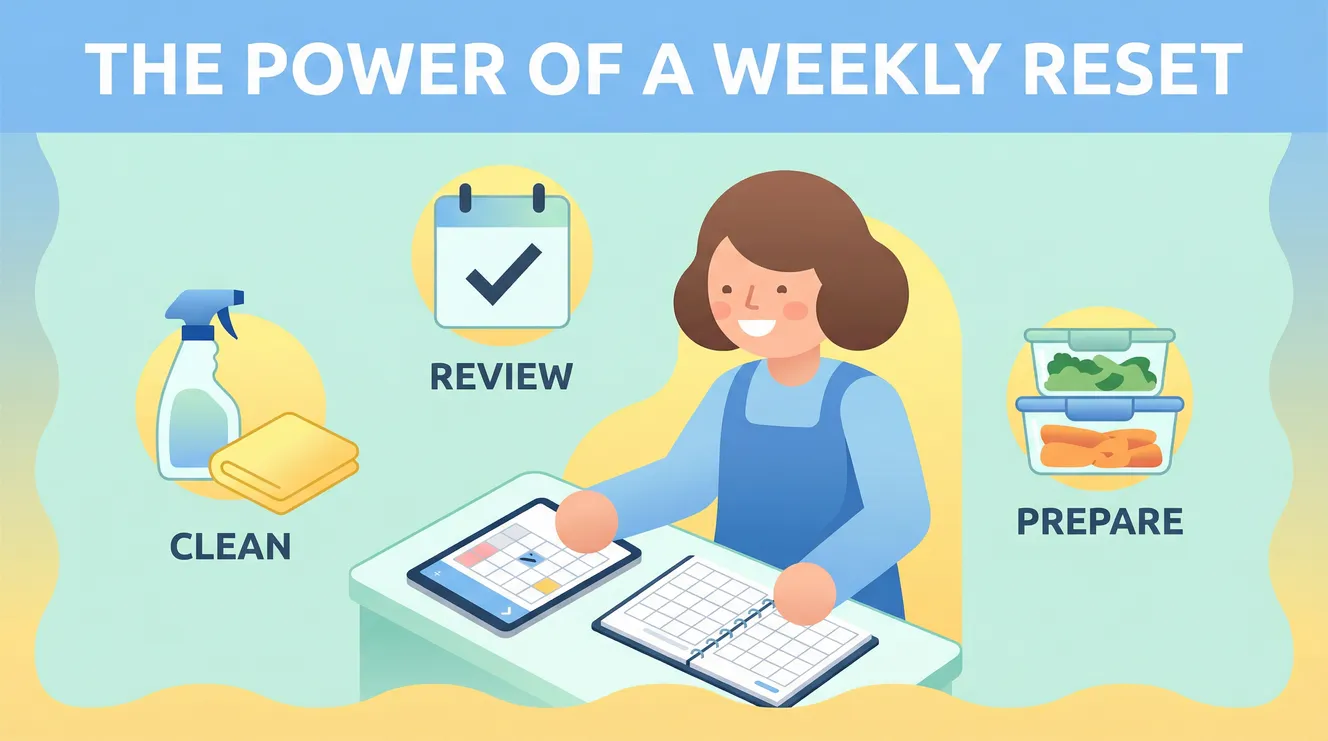
Unlike daily tidying, which maintains baseline order, the weekly reset is a comprehensive systems check. It addresses the layers that accumulate silently: the expired food in the fridge, the email subscriptions you’ve been meaning to cancel, the batteries that died mid-week. This ritual operates on three planes—physical (cleaning), mental (reviewing), and temporal (preparing)—creating a three-dimensional refresh that makes Monday morning feel like a clean slate rather than a cleanup mission.
The Neuroscience of the Reset: Why Your Brain Craves This Ritual
Your brain processes unfinished tasks as open loops, each one consuming a small amount of cognitive bandwidth. Psychologists call this the Zeigarnik effect—our tendency to remember incomplete tasks better than completed ones. A weekly reset closes these loops systematically, releasing the mental tension they create.
The ritual also leverages the “fresh start effect” documented in behavioral science research—temporal landmarks (like Monday morning) increase motivation and goal commitment. By preparing on Sunday, you’re capitalizing on this natural psychological reset button. The difference is you’ll be prepared for it instead of scrambling to catch up.
The Decision Fatigue Factor
Every decision you make during the week—from what to wear to what to eat—depletes your finite decision-making energy. By Sunday, you’re running on fumes. The weekly reset pre-makes decisions for the upcoming week: outfits are chosen, meals are planned, priorities are set. This front-loading reduces daily decision load by an estimated 40%, preserving mental bandwidth for high-impact choices.
The Cleaning Component: What to Clean Weekly (Beyond the Obvious)
Weekly cleaning isn’t about deep scrubbing—it’s about maintaining the invisible infrastructure that prevents daily life from decaying into chaos. These are the tasks that take 5-10 minutes each but create a multiplier effect on your week’s functionality.
The Kitchen Reset (20 minutes)
The fridge audit: Remove expired items, wipe down shelves, and group leftovers in a “use first” container at eye level. This prevents the “mystery container” problem and reduces food waste by up to 30%.
The coffee station deep clean: Descale the coffee maker (equal parts water and vinegar, brew cycle, then two water cycles). Clean the grinder burrs with a brush. This ensures your morning coffee is consistent and prevents machine failure.
The cutting board oil: Rub wooden boards with mineral oil to prevent cracking and bacterial buildup. This 2-minute task extends board life by years.
The Bathroom Refresh (15 minutes)
The drain maintenance: Pour 1/2 cup baking soda followed by 1 cup vinegar down bathroom drains. Let sit 15 minutes, then flush with boiling water. This prevents the slow buildup that leads to clogs and expensive plumber calls.
The toothbrush deep clean: Soak toothbrushes in hydrogen peroxide for 5 minutes, then rinse. This eliminates bacteria buildup that occurs from daily use.
The grout check: Spray grout lines with equal parts water and vinegar. Quick scrub with a toothbrush prevents mildew from becoming a permanent stain.
The Digital Deep Clean (10 minutes)
The desktop purge: Delete files from your desktop, empty the trash, and close all browser tabs. A study on digital clutter found that a clean digital workspace improves focus by 18%.
The phone app audit: Delete apps you haven’t used in two weeks. Move social media apps off the home screen into a folder. This reduces unconscious opening by 60%.
The email unsubscribe sprint: Open your inbox and unsubscribe from five promotional senders. This compound effect over weeks dramatically reduces email volume.
The Review Component: What to Audit Weekly for Mental Clarity
The review process is the mental equivalent of clearing your browser cache. It’s a structured reflection that prevents small issues from becoming major problems and ensures you’re aligned with your priorities rather than just reacting to urgencies.
The Financial Pulse Check (10 minutes)
The receipt reconciliation: Gather all receipts from the week. Enter them into your budgeting app or spreadsheet. Don’t judge the spending—just observe it. This awareness alone reduces impulse purchases by 15%.
The subscription audit: Check your bank statement for recurring charges. Cancel one subscription you haven’t used in 30 days. The average American has 12 subscriptions and uses only 6 regularly.
The bill schedule: Note which bills are due this week and set reminders. This prevents the stress of last-minute payments and late fees.
The Commitment Review (15 minutes)
The calendar audit: Look at the upcoming week. Identify any double-booked times or unrealistic scheduling. Move or decline one commitment that doesn’t align with your priorities.
The boundary check: Review who you said “yes” to this past week. Are you overcommitted to people who drain you? Undercommitted to relationships that nourish you? Adjust accordingly.
The energy forecast: Identify which days this week will be high-energy and which will be depleted. Schedule demanding tasks for high-energy days and recovery activities for low-energy days.
The Priority Calibration (10 minutes)
The one-thing focus: Write down the one task that, if completed this week, would make everything else easier or unnecessary. This is your priority anchor.
The progress check: Review goals you set last Sunday. Did you move forward? If not, what obstacle can you remove this week? This prevents goals from dying of neglect.
The values alignment: Ask: “Did this week’s actions reflect what I say I value?” If not, what’s one small shift you can make this week to realign?
The Preparation Component: Setting Future You Up for Success
Preparation is the ultimate form of self-compassion. It’s doing the work now so that future you, who will be tired and decision-depleted, doesn’t have to struggle. These tasks feel small in the moment but create massive relief throughout the week.
The Meal Foundation (30 minutes)
The protein prep: Cook one large batch of protein (chicken, beans, tofu) and portion it into containers. This eliminates the “what’s for dinner” decision on exhausted weeknights.
The vegetable wash: Wash and chop raw vegetables. Store them in glass containers at eye level in the fridge. Visibility increases consumption by 70%.
The breakfast pre-pack: Assemble overnight oats or pre-portion smoothie ingredients into freezer bags. Morning decisions eliminated.
The Wardrobe System (10 minutes)
The weekly hanger: Choose five outfits for the week and hang them together. Include underwear and accessories. This eliminates 35 weekly decisions (7 days × 5 decision points).
The shoe strategy: Place shoes for tomorrow by the door. This prevents the morning scramble and ensures you have what you need.
The bag pack: Pack your work bag, gym bag, and lunch bag the night before. Morning friction reduced to zero.
The Mental Space Creation (15 minutes)
The worry download: Write down everything you’re worried about for the upcoming week. Don’t solve it—just externalize it. This reduces nighttime rumination by 60%.
The inspiration capture: Bookmark one article, podcast, or video that genuinely excites you for the week. When you have a moment of downtime, you’ll reach for this instead of mindless scrolling.
The conversation starter: Identify one person you want to connect with this week and draft a text or email. Send it Monday morning. Relationships maintained proactively prevent the guilt of neglect.
The Ritual Framework: Making the Reset Stick
A ritual is different from a routine because it has intention and ceremony. The weekly reset only works if it becomes sacred, non-negotiable time. Here’s how to architect it for success.
The Time Blocking
Schedule your reset like a meeting with yourself. Sunday evening, 6-7:30 PM is ideal. It’s early enough that you still have energy, but late enough that it feels like closure. Put it in your calendar and protect it fiercely.
The Sensory Cues
Light a specific candle or play a particular playlist only during your reset. These sensory anchors train your brain to recognize “reset time.” After three weeks, the smell of that candle will trigger a calm, focused state automatically.
The Celebration
End your reset with a small reward—a cup of herbal tea, a piece of dark chocolate, 15 minutes with a book. This positive reinforcement makes the ritual something you look forward to rather than endure.
The Compound Effect: What Changes After One Month
Four weeks of consistent weekly resets create transformations that feel magical but are simply the result of compound intentionality.
The Visible Changes
– Your home stays at a baseline level of clean that makes daily tidying take 5 minutes instead of 30
– Your digital life feels organized instead of overwhelming
– Your finances are transparent—no more “where did my money go?” anxiety
The Invisible Changes
– Decision fatigue reduces dramatically—you’re making 50 fewer decisions weekly
– Your sense of control increases—you’re proactively shaping your life instead of reactively surviving it
– Sunday evening dread evaporates—you look forward to the ritual and the clarity it brings
Common Pitfalls: What Derails the Reset and How to Prevent It
Your Week’s Success Is Hidden in Sunday’s Ritual
The weekly reset isn’t another item on your to-do list—it’s the meta-task that makes all other tasks manageable. It’s the difference between living proactively and reactively, between feeling in control of your life and feeling controlled by your circumstances.
Start tonight. Set a timer for 90 minutes. Tackle just one area—clean the fridge, review your calendar, prep one meal. Feel the satisfaction of closing loops. Notice how Monday morning feels different when you’ve already done the thinking.
Your future self is waiting for you to show up on Sunday. They’ll thank you with interest.
Key Takeaways
Weekly resets close mental loops (Zeigarnik effect), reducing cognitive load and decision fatigue by up to 40% through pre-made decisions.
A comprehensive reset addresses three planes: physical cleaning (kitchen, bathroom, digital), mental review (finances, commitments, priorities), and temporal preparation (meals, outfits, space).
Micro-tasks like descaling the coffee maker, oiling cutting boards, and unsubscribing from emails take minutes but prevent major problems and expenses.
The ritual framework—time blocking, sensory cues, and celebration—transforms the reset from chore to sacred practice, ensuring consistency.
Four weeks of consistent resets create compound benefits: 2+ hours saved weekly, proactive mindset shift, and elimination of Sunday evening dread.
“`
Leave a Reply