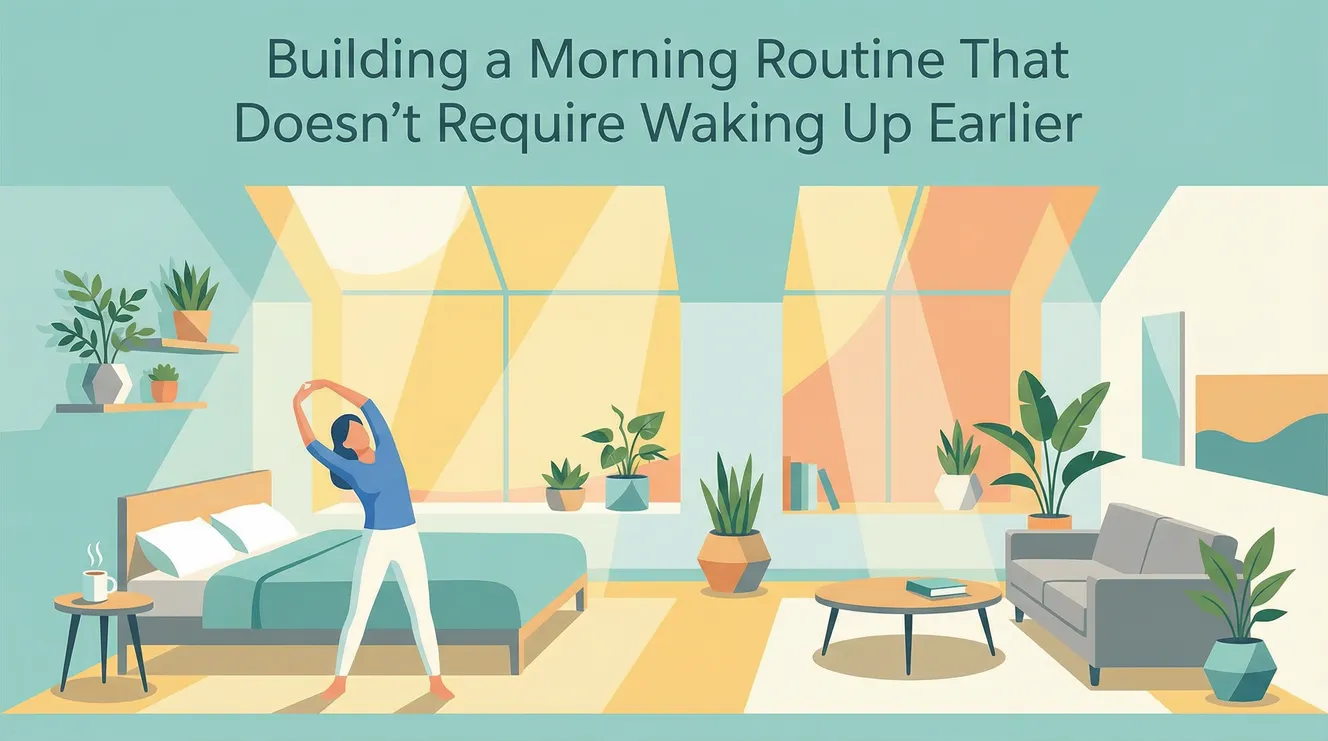
The morning routine industrial complex has sold us a lie: that transformation requires sacrifice at the altar of the alarm clock. According to research from the National Sleep Foundation, 35% of Americans already wake up feeling unrefreshed, and forcing an earlier wake time compounds this sleep debt, reducing cognitive performance and willpower throughout the day. The willpower you need to stick to a routine is precisely what sleep deprivation depletes.
The revolutionary shift is this: you don’t need more morning time. You need to reengineer the morning time you already have. By inserting micro-habits into existing actions and systematizing your environment, you can create a transformative routine that starts at your current wake time—not an aspirational one that requires superhuman discipline. The goal isn’t to wake earlier; it’s to wake better.
The Sleep Science Trap: Why Waking Up Earlier Backfires
Sleep research is unequivocal: chronic sleep restriction impairs decision-making, reduces emotional regulation, and increases cortisol levels. A 2023 study from NIH’s Sleep Research Consortium found that even one hour of sleep deprivation reduces next-day willpower by 23%—the exact willpower you need to maintain a new routine. The 5 AM wake-up call might work for two weeks, but when life demands late nights, the routine collapses and you’re left with failure guilt on top of exhaustion.
The biological reality is that sleep chronotypes are largely genetic. For night owls, forcing an early wake time is fighting biology, not building discipline. Dr. Michael Grandner, director of the Sleep and Health Research Program at the University of Arizona, emphasizes: “Morning routines should work with your natural rhythm, not against it. The goal is consistency within your chronotype, not conformity to an arbitrary standard.” This means your transformative routine might start at 7:15 AM, and that’s not failure—that’s optimization.
The Willpower Depletion Problem
Willpower is a finite resource that depletes throughout the day. Morning is when it’s strongest—but if you’ve sacrificed sleep to wake earlier, you’ve already spent your willpower budget before the day begins. A study in the Journal of Personality and Social Psychology demonstrated that sleep-deprived individuals show the same decision-making deficits as mildly intoxicated people. Expecting yourself to meditate, journal, and exercise under these conditions is setting yourself up for shame spirals when you inevitably hit snooze.
The Willpower Budget
Full Sleep (7-8 hours): 100% willpower available for new habits
Reduced Sleep (6 hours): 77% willpower available – decision fatigue sets in by noon
Chronic Restriction (5 hours): 50% willpower available – routines collapse within two weeks
Strategic Solution: Build routine into existing wake time rather than sacrificing sleep
The Micro-Habit Revolution: 5-Minute Transformations
Micro-habits are actions that take less than five minutes and can be stacked onto existing behaviors without extending your morning timeline. The genius is in the integration—you’re not adding time, you’re adding intention to time that’s already there.
The Coffee Mindfulness Stack
While your coffee brews (a 4-minute process you’re already doing), stand still and practice box breathing—inhale for 4 counts, hold for 4, exhale for 4, hold for 4. Four cycles take exactly 3 minutes. You’re not adding time; you’re reclaiming the waiting period that’s usually spent scrolling your phone. A 2022 study in Scientific Reports found that 3 minutes of mindful breathing reduces morning cortisol by 18% and improves focus for up to two hours.
The Shower Power-Up
The shower is already part of your routine. Add a 90-second cold rinse at the end. Cold exposure triggers a cascade of benefits: norepinephrine release (increasing alertness), brown fat activation (boosting metabolism), and improved mood. You’re not extending your shower time—you’re reallocating the last 90 seconds from warm to cold. The shock passes in 15 seconds, and the alertness lasts for hours.
Habit Stacking: The Architecture of Automatic Behavior
Habit stacking, popularized by James Clear in *Atomic Habits*, attaches new behaviors to existing, automatic actions. The formula is: “After I [current habit], I will [new habit].” The genius is that the existing habit is already anchored in time—you’re not adding minutes, you’re adding seconds of intentional action.
The “After I Pour Coffee” Stack
“After I pour my coffee, I will drink one full glass of water.” The coffee pour is already automatic. Adding the water drink takes 15 seconds but hydrates you after 8 hours of dehydration and reduces coffee jitters. The stack becomes one fluid motion: cup down, glass up, drink, coffee in hand.
The “After I Brush Teeth” Stack
“After I finish brushing my teeth, I will name three things I’m looking forward to today.” While the toothpaste taste is still fresh, your brain is in a neutral state—not yet stressed about the day. This micro-gratitude practice takes 20 seconds but orients your mindset toward positive anticipation rather than dread.
The Night-Before Setup: Your Morning’s Secret Weapon
The most powerful morning routine happens at night. Pre-decision eliminates morning decision fatigue, making your routine feel effortless because you’re simply executing choices already made while your willpower was fresh.
The 10-Minute Evening Reset
Before bed, spend 10 minutes setting up your morning: place your coffee mug next to the machine with a pod already inserted, lay out workout clothes if exercise is part of your stack, set a glass of water on the nightstand, and put the book you want to read on the breakfast table. These micro-actions compound into a morning that feels curated rather than chaotic. The behavioral economics principle of pre-commitment shows that decisions made in advance have a 3x higher follow-through rate than those made in the moment.
The Priority List Pre-Write
Each night, write down the one thing that would make tomorrow feel successful. Not a to-do list—just one priority. In the morning, you’ll see it before your phone can flood you with other people’s priorities. This single decision point takes 30 seconds at night but saves 10 minutes of morning anxiety and prevents the “what should I focus on?” paralysis.
The Sensory Reset: Using Environment as a Trigger
Your brain responds to sensory cues faster than conscious thought. By engineering your environment to trigger positive behaviors, you bypass willpower entirely. The routine becomes automatic because your senses initiate it.
Light as an Alarm
A smart bulb set to gradually brighten starting at your wake time (not earlier) suppresses melatonin naturally, making you feel alert without the jarring sound of an alarm. Place it in your bathroom, not your bedroom. When you enter to brush your teeth, the bright light signals your brain that the day has begun. The chronobiology research shows that 10,000 lux of light for 10 minutes increases alertness more effectively than coffee and resets your circadian rhythm without requiring you to wake earlier.
Sound as a Motivator
Your current alarm is likely your phone’s jarring default. Replace it with a sunrise alarm clock that uses gradually increasing nature sounds or a smart speaker that plays a specific energizing playlist. The cue becomes automatic: when you hear the first notes of your morning song, you stand up and stretch. The sound triggers the action without requiring conscious decision.
Smell as a Ritual
Place an essential oil diffuser (set on a timer) in your bathroom with peppermint or citrus oil. The scent hits you when you enter for your morning routine, providing an immediate energy boost. Olfactory cues are processed directly by the limbic system, bypassing conscious thought. It’s the fastest way to shift state without adding time.
The Reality Check: What Actually Works vs. Instagram Fantasy
Social media shows us sunlit meditation corners and elaborate breakfast spreads at 5:30 AM. This is a highlight reel, not a sustainable system. The routine that sticks is the one that fits your actual life, not your aspirational one. If you have young children, a demanding job, or health issues that affect sleep, waking earlier isn’t just difficult—it’s counterproductive.
The “Perfect Morning” Myth
A realistic, sustainable morning routine focuses on consistency over duration. Five minutes of intentional breathing every morning beats a 30-minute meditation practice you skip three days a week. One glass of water beats a elaborate smoothie you don’t have time to make. The routine that survives is the one that honors your actual constraints rather than imposing aspirational ones.
The Sustainable Morning Equation
Consistency > Intensity: 5 minutes daily beats 30 minutes occasionally
Integration > Addition: Stack habits onto existing actions vs. adding new time blocks
Pre-decision > Willpower: Night-before setup eliminates morning decision fatigue
Sensory cues > Alarms: Light, sound, and smell trigger automatic behaviors
The 7-Day Implementation: Your Wake-Time-Proof Routine
Day 1-2: The Audit
Observe your current morning without judgment. What do you do automatically? Where are the natural pauses? Write down three existing actions (coffee, shower, toast) that can serve as habit anchors.
Day 3-4: The Stack
Choose one anchor action and attach a micro-habit. “After I pour coffee, I will drink a glass of water.” Practice it for two days until it feels automatic.
Day 5-6: The Setup
Spend 10 minutes before bed setting up one sensory cue: place the water glass, lay out clothes, set the light timer. Notice how effortless the morning feels when you remove decisions.
Day 7: The Integration
Add a second micro-habit stack and evaluate: does this feel sustainable? If any element feels forced, remove it. The routine should feel like relief, not obligation.
Your Morning Belongs to You, Not Your Alarm
The transformative morning routine you’ve been chasing isn’t hidden in an earlier wake time. It’s hidden in the intention you bring to the time you already have. You don’t need to wake at 5 AM to feel in control of your day. You need to wake at your time and own it completely.
Start tonight. Set out one thing. Stack one habit. Engineer one cue. Tomorrow, you’ll wake up and discover that transformation isn’t about adding time—it’s about adding presence to the time you already have.
Your perfect morning starts at your current wake time. And it’s already waiting for you.
Key Takeaways
Waking up earlier sacrifices sleep quality and depletes willpower, making sustainable routines nearly impossible for most people.
Micro-habits (5-minute actions) stacked onto existing morning behaviors (coffee, shower, brushing teeth) create transformation without adding time.
Sensory environmental cues (light, sound, smell) trigger automatic behaviors, bypassing willpower and creating effortless routines.
Night-before preparation (pre-decision, sensory setup) eliminates morning decision fatigue, making your routine feel curated rather than chaotic.
A sustainable morning routine prioritizes consistency over intensity and works with your chronotype rather than fighting against it.
“`
Leave a Reply