Forgetting to drink water isn’t a character flaw—it’s a cognitive blind spot in our overstimulated world. Research from CDC hydration studies reveals that 43% of adults drink fewer than four cups of water daily, far below the recommended intake. The problem isn’t ignorance; it’s implementation. We know hydration matters for regulating body temperature, delivering nutrients, and maintaining mental clarity, but knowing doesn’t translate into doing when your day demands constant attention elsewhere.
The consequences of chronic low-grade dehydration extend beyond mild discomfort. Without adequate fluid intake, your body struggles to flush waste, lubricate joints, and maintain cellular function. Even a 2% fluid loss impacts cognitive performance, affecting memory, information processing, and mood stability. The UCLA Health hydration research demonstrates that fatigue, headaches, and difficulty concentrating often trace back to insufficient fluid intake rather than more complex medical issues.
The Invisible Thirst: Recognizing Dehydration Before It Hurts
By the time your brain registers thirst, you’re already operating at a fluid deficit. This delayed warning system makes forgetfulness particularly dangerous. The body’s thirst mechanism lags behind actual hydration needs, meaning you can be significantly dehydrated before feeling thirsty at all. This biological quirk explains why so many people walk around in a perpetual state of mild dehydration without realizing it.
Subtle signals precede obvious thirst. Dark yellow urine serves as a reliable visual indicator—aim for pale straw color. Morning headaches often reflect overnight dehydration compounded by insufficient daytime intake. Mid-afternoon energy crashes frequently stem from diminished blood volume forcing your heart to work harder. Dry, dull skin and constipation represent external and internal signs that your body is conserving water.
Understanding these early warnings transforms how you approach hydration. Instead of reactive drinking, you can implement proactive strategies that ensure consistent fluid intake throughout the day, regardless of how busy or distracted you become.
Dehydration Warning Signs You’re Probably Ignoring
- Bad breath: Saliva production decreases, allowing odor-causing bacteria to proliferate
- Sugar cravings: Dehydration makes it difficult for your liver to release glycogen, triggering sweet cravings
- Brain fog: Reduced cerebral blood flow impairs concentration and decision-making
- Muscle cramps: Electrolyte imbalance from fluid loss triggers involuntary contractions
- Irritability: Even mild dehydration affects mood-regulating neurotransmitters
The Psychology of Forgetting: Why Water Falls Off Your Radar
Our brains prioritize immediate, novel threats over routine maintenance tasks. This evolutionary wiring served our ancestors well when spotting predators mattered more than regular sipping. Modern life hijacks this system with constant stimulation—notifications, deadlines, multitasking—pushing hydration to cognitive background noise. Drinking water provides no immediate dopamine hit, no urgent deadline, no social validation, making it vulnerable to neglect.
The Invisibility Problem
Unlike hunger, which produces dramatic stomach growls and concentration-destroying pangs, early dehydration whispers. Thirst is easily misinterpreted as mild hunger or fatigue. You snack when you should sip, caffeinate when you need water, and power through headaches with painkillers instead of addressing the root cause. The Scripps Health hydration guidelines confirm that most people mistake dehydration symptoms for other issues, treating effects instead of causes.
The Habit Formation Barrier
Building a water-drinking habit requires consistent contextual cues. Coffee becomes automatic because we associate it with morning rituals and energy needs. Water lacks these powerful associations. Without environmental triggers—like a visible water bottle on your desk or phone reminders—the habit fails to form. Your brain relies on external prompts for low-priority actions, and in the absence of reminders, hydration simply doesn’t happen.
The Hydration Multiplier: Getting Water From Unexpected Sources
Relying solely on conscious water drinking sets you up for failure. The solution lies in creating a hydration ecosystem where fluids arrive through multiple channels, some requiring zero memory. Your body absorbs water from foods, beverages, and even metabolic processes, allowing you to stay hydrated even when drinking habits slip.
Water-rich foods provide stealth hydration—nutrients and fluids delivered together. The Harvard Health nutrition guidelines emphasize that approximately 20% of daily fluid intake comes from food sources. Strategic meal choices can compensate significantly for forgotten water bottles.
Hydration Powerhouses: Foods Over 90% Water
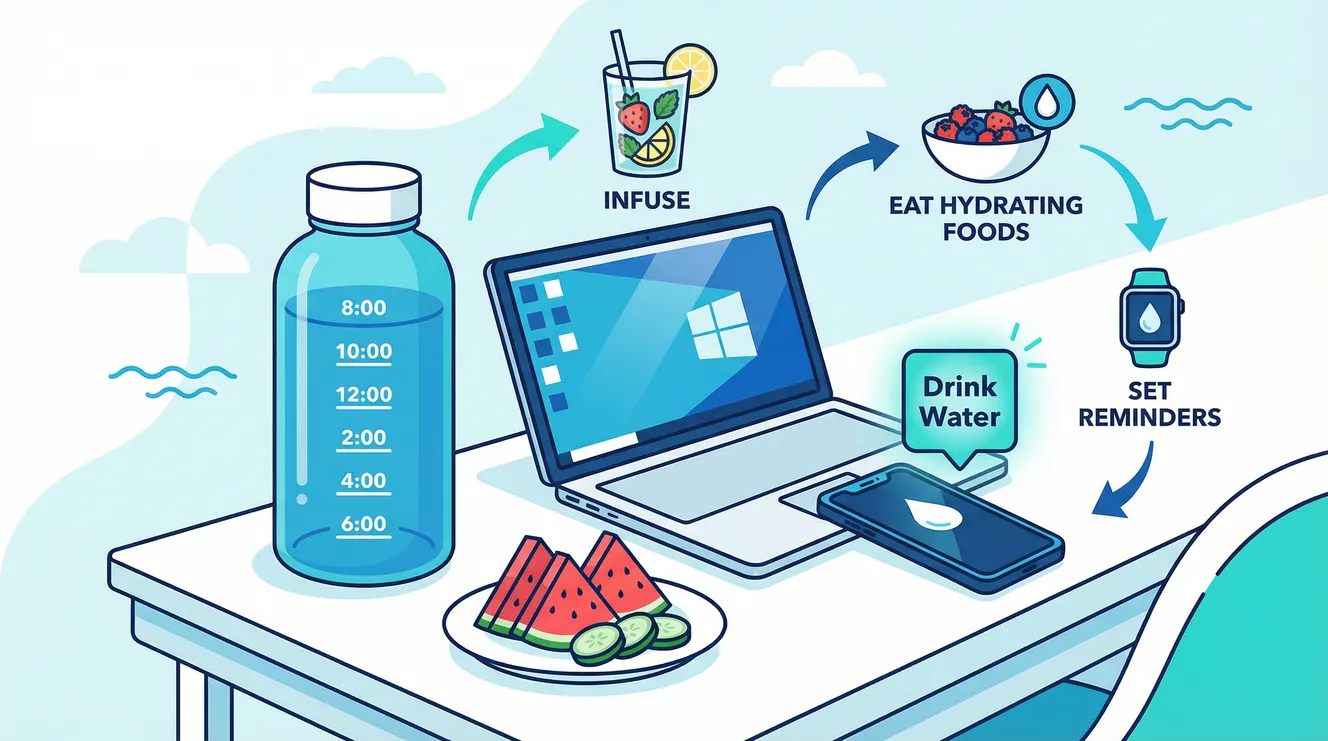
Cucumbers lead the pack at 96% water content, delivering crisp refreshment with minimal calories. Watermelon, strawberries, and cantaloupe provide sweetness while hydrating. Leafy greens like iceberg and romaine lettuce, spinach, and cabbage contribute fluid alongside vitamins and minerals. Zucchini, celery, and tomatoes integrate easily into meals, silently boosting your hydration status.
Practical integration doesn’t require major dietary overhauls. Add cucumber slices to your sandwich, berries to your breakfast cereal, or an extra handful of lettuce to your lunch salad. Each small addition contributes to your daily fluid goal without requiring you to remember another task.
Beyond Plain Water: Alternative Hydration Sources
Coconut water offers natural electrolytes with less sugar than sports drinks, making it ideal post-exercise recovery. Milk provides protein, carbohydrates, and minerals while contributing to fluid intake. Smoothies combine multiple hydrating ingredients—fruit, yogurt, ice—into a single, substantial beverage that feels more satisfying than water alone.
Herbal teas and clear broths contribute to daily fluid goals, while moderate coffee and tea consumption counts despite mild diuretic effects. The Teladoc Health hydration strategies confirm that caffeinated beverages in moderation contribute positively to overall hydration status.
The 20% Rule: Making Food Work for You
If drinking eight glasses of water feels impossible, aim for six glasses plus strategic food choices that provide the remaining 20% of your fluid needs. This approach creates a hydration buffer for forgetful days.
Breakfast: Oatmeal made with milk topped with berries (absorbs liquid, provides fluid)
Lunch: Large salad with cucumber, tomatoes, and peppers (high water content)
Snack: Watermelon or orange slices (90%+ water content)
Dinner: Vegetable soup or zucchini noodles (fluid-rich meal base)
Behavioral Engineering: Designing Your Environment for Automatic Hydration
The most reliable solution for forgetfulness isn’t better memory—it’s better design. Environmental cues trigger automatic behaviors without conscious effort, making hydration inevitable rather than optional. These strategies work even on your busiest, most distracted days.
The Visual Trigger Method
Place water bottles in locations where your eyes naturally rest throughout the day: your desk, bedside table, car cup holder, and next to the TV remote. The visual presence acts as a subliminal reminder. Choose transparent bottles with measurement markings to create a visual progress tracker.
Color psychology enhances this effect. Blue and green bottles subconsciously reinforce the water association, while bright colors create focal points that draw your attention. The Silver Cross Hospital wellness tips recommend keeping a bottle within arm’s reach at all times, turning hydration into an effortless reflex rather than a remembered task.
The Habit Stacking Technique
Link water drinking to existing automatic behaviors. Drink one glass immediately after brushing your morning teeth. Take three sips every time you check your phone. Finish a full glass while your coffee brews. These piggyback habits attach hydration to actions you never forget, embedding them in established neural pathways.
The Digital Safety Net
Smartphone reminders solve the memory problem externally. Set recurring alarms every 90 minutes, or use hydration tracking apps that gamify the process. Smart water bottles with integrated tracking and LED reminders provide real-time feedback. These tools externalize the memory burden, freeing mental bandwidth while ensuring consistent intake.
The Compound Effect: How Small Changes Create Hydration Momentum
Hydration success rarely comes from dramatic overhauls. It emerges from tiny, consistent actions that accumulate into automatic behavior. The compound effect explains why adding one cucumber slice to your lunch or placing one bottle by your bed eventually transforms your hydration status without conscious effort.
Start with a single intervention. Choose the strategy that feels easiest—perhaps keeping a bottle in your car or adding lemon to your water. Practice it for two weeks until it becomes automatic. Then add another. This layered approach prevents overwhelm while building a robust hydration system that survives chaotic days.
The beauty of the compound effect is its self-reinforcing nature. As you become better hydrated, you think more clearly, which helps you remember to drink more water. Increased energy makes you more active, which naturally triggers thirst and drinking. Better skin and digestion provide visible feedback that motivates continued effort.
The Two-Week Hydration Challenge
Week 1: Place one full water bottle in each of three locations (bedside, desk, car). Don’t worry about drinking—just observe when you naturally reach for them.
Week 2: Add one water-rich food to your daily routine (cucumber with lunch, berries with breakfast, watermelon as snack).
Week 3+: Choose one additional strategy from the table above. Continue adding layers monthly.
Real-World Success: Forgetful People Who Fixed Their Hydration
Abstract strategies become concrete through relatable examples. These anonymized case studies demonstrate how different personality types successfully solved their hydration forgetfulness.
The Busy Executive Who Automated Intake
Mark, a 45-year-old CEO, hadn’t consumed plain water in years, surviving on coffee and diet soda. Chronic headaches and afternoon fatigue pushed him to try a smart water bottle that glowed every hour. The visual cue cut through his distraction. Within a month, his headaches vanished and energy stabilized. The technology did the remembering for him.
The Teacher Who Used Food as a Backup
Sarah, an elementary school teacher, couldn’t leave her classroom for frequent water breaks. She started packing lunch boxes full of hydrating foods: cucumber sticks, watermelon cubes, cherry tomatoes, and yogurt. Even on days when she forgot her water bottle entirely, she maintained adequate hydration through strategic snacking between classes.
The Parent Who Built a Family System
Jennifer, a mother of three, turned hydration into a family game. Each child had a colored bottle on the kitchen counter, and everyone took “hydration breaks” together during TV commercials. The social accountability ensured she drank while caring for her family’s needs, transforming a personal weakness into a collective strength.
Your Hydration Solution Is Already Within Reach
Forgetting to drink water doesn’t mean you’re destined for chronic dehydration. It means you need systems that work with your brain’s natural tendencies, not against them. The most effective hydration strategy isn’t willpower—it’s environmental design, habit hacking, and food-based backup plans.
Start where you are. Pick one strategy from this article that feels almost too easy. Implement it for two weeks. Let the compound effect work its magic. Your body will reward you with clearer thinking, steadier energy, and the profound relief of no longer fighting a battle you were never designed to win alone.
The water bottle is on your desk. The cucumber is in your fridge. The reminder is in your phone. All that’s missing is your permission to stop relying on memory and start relying on design.
Key Takeaways
Chronic mild dehydration stems from cognitive limitations, not personal failing—our brains aren’t wired to prioritize routine water intake amid constant stimulation.
Early dehydration signals—headaches, fatigue, sugar cravings, brain fog—often masquerade as other issues, making recognition the first step to solution.
Strategic placement of visual cues, habit stacking, and food-based hydration create automatic systems that don’t rely on memory or willpower.
Water-rich foods like cucumber (96%), watermelon, and leafy greens provide stealth hydration that compensates for forgotten beverages.
Start with one small, sustainable change and layer additional strategies over time to build a robust, failure-proof hydration system.
Leave a Reply