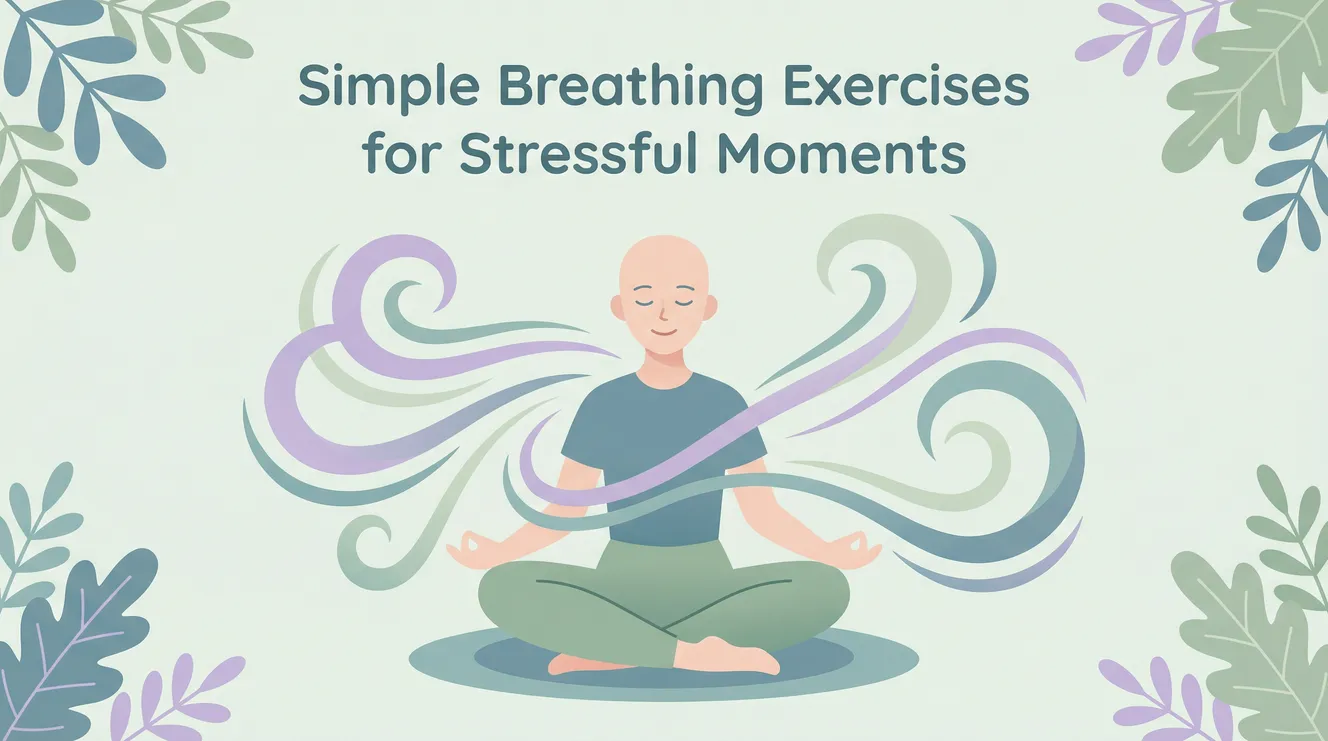
Stress hijacks your breathing pattern automatically—shallow chest breaths signal danger to your brain, triggering a cascade of cortisol and adrenaline. This ancient survival mechanism served our ancestors well when escaping predators, but modern stressors rarely require fight-or-flight responses. The NHS mental health resources confirm that reversing this pattern through deliberate breathing activates your parasympathetic nervous system, lowering heart rate and blood pressure within minutes.
The science is straightforward: when you extend your exhale beyond your inhale, you manually stimulate the vagus nerve, sending a safety signal to your brainstem. This physiological override works regardless of whether your stress stems from a looming deadline, an overflowing inbox, or a difficult relationship. Research from NIH breathing studies demonstrates that just five minutes of structured breathing reduces cortisol levels by up to 20%, making it more effective than many pharmaceutical interventions without side effects.
The Stress-Breathing Feedback Loop: Understanding Your Body’s Distress Signal
Most people breathe inefficiently, especially under pressure. Chest breathing uses only the top third of your lungs, creating a state of chronic oxygen deprivation that mimics anxiety. Your brain interprets this shallow pattern as proof of danger, creating a vicious cycle: stress causes shallow breathing, and shallow breathing maintains stress. Breaking this loop requires conscious intervention that feels counterintuitive at first but becomes automatic with practice.
The physiological markers of stress—racing heart, tense muscles, racing thoughts—all connect to breath pattern. When you inhale, your heart rate naturally increases slightly. When you exhale, it decreases. Extending the exhale maintains that calming effect longer, giving your nervous system time to recalibrate. This is why all effective stress-reduction breathing techniques emphasize lengthening the out-breath, creating what researchers call “respiratory sinus arrhythmia,” a state of optimal nervous system balance.
Three Warning Signs You’re Breathing Into Stress
- Shoulder elevation: If your shoulders rise when you inhale, you’re breathing into your chest rather than your diaphragm
- Holding your breath: Concentration often causes breath-holding, creating oxygen debt that spikes anxiety
- Shallow sips: Tiny inhales through the mouth signal your body that danger is present
Four Battle-Tested Breathing Patterns for Immediate Relief
Different stressors require different breathing responses. These four techniques, validated by clinical research and used by high-stress professionals from Navy SEALs to emergency room physicians, provide specific tools for distinct situations.
Box Breathing: The Pattern That Resets Your Nervous System
Box breathing creates perfect symmetry—four counts in, four counts hold, four counts out, four counts hold. This technique, taught to military special forces, works by giving your brain a predictable pattern to focus on, crowding out anxious thoughts. The Jed Foundation’s breathing resources highlight how this method delivers measurable calm within four complete cycles.
The technique excels when you need to maintain performance under pressure—before public speaking, during difficult negotiations, or when receiving dreaded feedback. It doesn’t sedate you; it centers you, preserving alertness while eliminating jitteriness.
4-7-8 Breathing: The Natural Tranquilizer for Overwhelm
Developed by Dr. Andrew Weil, this pattern emphasizes the exhale more heavily—inhale for four, hold for seven, exhale for eight. The extended breath retention allows maximum oxygen exchange, while the long exhale releases accumulated tension. Healing Breaths practitioners recommend this technique specifically for acute anxiety attacks and sleep-onset insomnia.
The technique can make you slightly lightheaded initially, which is normal—it’s a sign of your body adjusting to higher oxygen levels. Practice it seated at first, and stop after four cycles. With regular use, you’ll find it becomes your go-to tool for shutting down rumination and quieting a racing mind.
Diaphragmatic Breathing: The Foundation of All Stress Relief
This technique trains you to breathe into your belly rather than your chest, instantly activating your relaxation response. Placing one hand on your stomach and one on your chest creates tactile feedback, helping you identify the correct pattern. The WebMD stress management guide emphasizes that mastering this foundational skill makes all other breathing techniques more effective.
Practice this for five minutes daily as a preventive measure, not just a crisis intervention. It recalibrates your default breathing pattern, making shallow chest breathing less automatic. Over time, you’ll notice yourself naturally breathing more deeply during everyday activities, creating a lower baseline stress level.
Paced Breathing: The Portable Stress Shield
This flexible technique involves matching your inhale and exhale duration, then gradually extending both. Start with four counts in and four counts out, then slowly work up to six or eight counts. The beauty lies in its adaptability—use it during your commute, while standing in line, or during a tense meeting.
The gradual progression trains your respiratory muscles while simultaneously expanding your stress tolerance. Each increase in breath duration represents a parallel increase in your ability to remain calm under duress. The Mental Health First Aid resources recommend this as the most sustainable long-term practice for chronic stress sufferers.
The Implementation Blueprint: Making These Techniques Actually Work
Knowing breathing exercises intellectually is worthless without consistent practice. The challenge isn’t complexity—it’s remembering to use these tools when you’re already stressed. The solution lies in strategic implementation that removes decision-making during crisis moments.
Anchor Them to Existing Routines
Practice one minute of diaphragmatic breathing while your morning coffee brews. Do three box breaths before opening your email. Use 4-7-8 breathing after parking your car before walking into the house. These anchors attach new habits to established ones, ensuring practice happens automatically rather than requiring willpower.
Create Environmental Reminders
Place a small sticker on your computer monitor labeled “Breathe.” Set a silent phone reminder that displays “Box breath now” at 11 AM and 3 PM—peak stress times. Keep a breathing exercise card in your wallet. These cues bypass your memory entirely, prompting action when you need it most.
The Stress-Response Rehearsal
Practice your chosen technique when you’re already calm. This creates muscle memory so that during actual stress, your body automatically defaults to the pattern. Athletes rehearse plays endlessly so they execute under pressure—your nervous system works the same way.
Rehearsal Protocol: For one week, practice your technique for two minutes, three times daily, regardless of stress level. This builds the neural pathway you’ll need during crisis.
Measure What Matters
Track not just practice frequency but physiological markers. Take your heart rate before and after a breathing session. Rate your stress level on a 1-10 scale pre- and post-practice. These measurements provide concrete evidence of effectiveness, motivating continued use when willpower wanes. Most people abandon breathing exercises because they don’t perceive immediate results—tracking makes the invisible visible.
Real-World Applications: Matching Techniques to Stressful Scenarios
Generic advice to “just breathe” ignores the nuance of different stressors. Strategic deployment maximizes impact.
The Pre-Presentation Power-Up
Ten minutes before speaking, excuse yourself to the restroom. In the privacy of a stall, perform four cycles of box breathing. This centers your energy without sedating you, preserving the alertness needed for performance while eliminating trembling hands and a quivering voice.
The Family Dinner De-Escalation
When relatives push your buttons, you can’t disappear for a meditation session. Instead, adopt an attentive listening posture (which excuses you from speaking) and practice paced breathing silently. The technique is invisible to others but creates a buffer between their comments and your reaction, giving you space to choose your response rather than automatically snapping back.
The Middle-of-the-Night Thought Spiral
Waking at 3 AM with racing thoughts responds exceptionally well to 4-7-8 breathing performed lying down. The technique naturally induces drowsiness while the counting gives your mind something to focus on besides worries. Most people find they don’t complete four full cycles before falling back asleep.
The Traffic Jam Temper Tamer
Road rage is a perfect example of unnecessary stress activation. When traffic stalls, place both hands on the steering wheel and practice diaphragmatic breathing. The physical contact with the wheel provides additional sensory grounding while the belly breathing prevents the cortisol spike that makes you honk, gesture, and arrive at work furious.
The 90-Second Rule
Neuroscience reveals that the physiological surge of an emotion lasts only 90 seconds. If you can breathe through a stress response for 90 seconds without feeding it with more anxious thoughts, it naturally dissipates. Use any technique, but commit to 90 seconds minimum.
Beyond the Basics: Advanced Integration for Chronic Stress
For those living with persistent stress, breathing exercises become more powerful when combined with other modalities. The synergy creates a stress-management ecosystem where each element supports the others.
Breathing + Movement
Practice diaphragmatic breathing while walking slowly. Coordinate your inhales and exhales with your steps—inhale for four steps, exhale for six. This walking meditation combines the calming effects of movement with breath control, making it ideal for lunch breaks or post-work decompression.
Breathing + Visualization
As you exhale, visualize stress leaving your body as dark smoke. On the inhale, imagine breathing in clear, healing light. This mental imagery engages your brain’s visual processing centers, further distracting from anxious thoughts while the breath handles the physiology.
Breathing + Progressive Muscle Relaxation
Tense a muscle group as you inhale, then release it completely on the exhale. Move systematically through your body—feet, calves, thighs, abdomen, shoulders, jaw. This combination addresses both the mental and physical manifestations of stress simultaneously.
Your Breath Is Your Built-In Stress Shield
You carry the most powerful stress-management tool you’ll ever own everywhere you go. It requires no batteries, costs nothing, and works in 90 seconds. Yet most people never learn to use it deliberately, surrendering control of their nervous system to external circumstances.
The techniques in this article aren’t complicated, but they do require one thing: your decision to practice. Start with the technique that feels easiest. Attach it to something you already do daily. Measure the difference. Let the evidence convince you.
Your next stressful moment is already on its way. The question isn’t whether you’ll feel stress—it’s whether you’ll have the tools to respond or simply react. Breathe differently, and you live differently.
Key Takeaways
Stress triggers shallow chest breathing, which signals danger to your brain—deliberate breathing patterns interrupt this cycle within 90 seconds.
Box breathing, 4-7-8 breathing, diaphragmatic breathing, and paced breathing each serve different stress scenarios, from acute panic to chronic anxiety.
The exhale is your primary relaxation tool—techniques that extend the out-breath provide faster and deeper calm than inhalation-focused practices.
Consistency matters more than duration—practicing two minutes daily builds neural pathways that make these techniques automatic during crises.
Attaching breathing exercises to existing routines (coffee brewing, parking your car, checking email) eliminates the need to remember them during busy days.
Leave a Reply