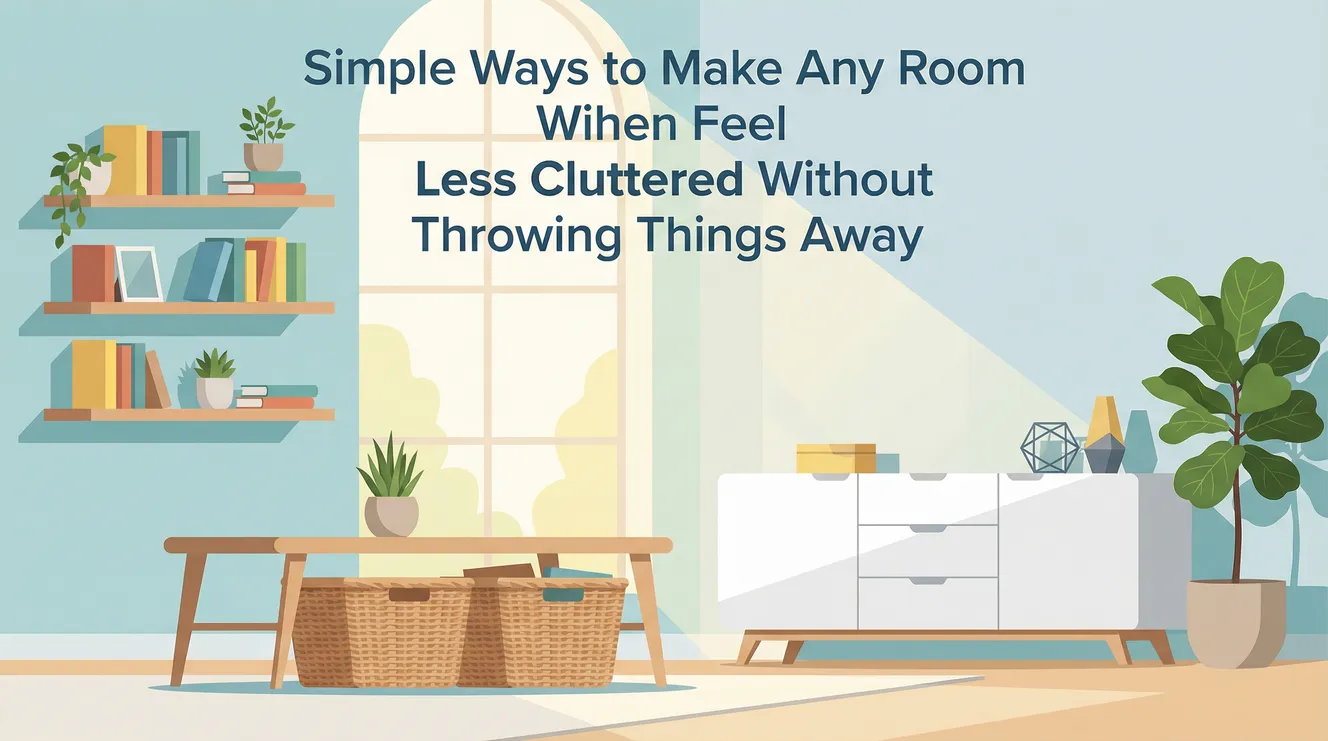
The contemporary obsession with decluttering has created a false binary: either live in Spartan emptiness or drown in visual chaos. But environmental psychology offers a third path. Research from UCLA’s Center on Everyday Lives and Families discovered that visual clutter competes for neural resources, but the brain’s definition of clutter hinges on visual boundaries, not item volume. In plain terms: scattered objects create stress, contained objects create calm, regardless of how many you own.
This distinction reframes the entire organizing challenge. Instead of asking “what can I get rid of?” we ask “how can I make what I own feel intentional?” The answer lies in architectural principles applied to micro-spaces: creating sight lines, establishing visual weight, and controlling what the eye notices first. Your room becomes a gallery where everything has a frame, breathing room, and purposeful placement.
The Boundary Effect: How Containers Create Instant Calm
A container is more than a vessel—it’s a visual full stop. When items sit loose on a surface, your eye treats each one as a separate data point to process. Twenty items equal twenty visual stimuli, creating cognitive overload. Place those same items in a tray, basket, or box, and your brain registers one cohesive unit. The chaos becomes a curated collection without removing a single object.
The magic lives in the edges. A wooden tray on a coffee table creates a hard boundary that says “everything here belongs together.” The items inside—candle, book, remote, coaster—suddenly feel intentional, not random. Strategic storage containers succeed because they transform visual noise into visual paragraphs, giving your brain natural places to rest between processing information.
Consider the kitchen counter: a blender, knife block, fruit bowl, and mail pile create four competing visual zones. Place the mail in a lidded box, the fruit in a wire basket, the knives in a block that matches your cabinet hardware, and suddenly you’ve created three intentional vignettes instead of one chaotic landscape. The transformation cost? Under $50. The psychological return? Measured in daily stress reduction.
The Layering Principle: Creating Depth Instead of Flatness
Flat surfaces feel cluttered when items sit at the same visual height. Layering creates depth that tricks the eye into seeing order. Place a shallow box at the back of a shelf, then arrange items in front of it at varying heights. The box becomes a backdrop that adds dimension while containing less attractive items. A cake stand on a bathroom counter elevates daily products into a display while freeing up space underneath for storage. This vertical thinking transforms two-dimensional clutter into three-dimensional design.
Chromatic Camouflage: How Color Creates Visual Quiet
Color operates as visual volume control. A room with 50 objects in 50 different colors screams for attention. The same 50 objects in three complementary tones whispers. This isn’t about minimalism; it’s about chromatic discipline. Your brain processes color before shape, so controlling the color story controls the clutter story.
A groundbreaking experiment by environmental psychologists at Cornell revealed that participants rated rooms with chromatic consistency as “30% more organized” than rooms with matched item counts but varied colors. The effect was so strong that some participants couldn’t believe the rooms contained the same number of objects until researchers showed them the inventory lists.
Apply this by choosing a base color (warm cream), a secondary (sage green), and an accent (terracotta). Purchase storage containers, trays, and visible organizers exclusively in these tones. Your existing belongings can stay—they’ll simply be framed by a more cohesive visual field. A Brooklyn renter transformed her chaotic studio by spray painting all her storage boxes the exact shade of her walls. The boxes disappeared visually, making her belongings appear to float in organized space. Total cost: $18. Impact: immediate and profound.
The Pattern Interruption Technique
Patterns are visual caffeine—they stimulate and energize, which is the opposite of calm. If your room feels cluttered, replace patterned textiles (curtains, pillows, rugs) with solid colors in your chosen palette. Don’t discard the patterns—store them for later. This temporary edit reveals whether pattern or possession is the real culprit. Most people discover that 70% of their visual stress evaporates with pattern removal, even when every item remains.
The Illusion of Abundance: Lighting Strategies That Flatten Visual Noise
Shadows are the secret saboteurs of visual order. Every object casts a shadow, and in a room with a single overhead light, those shadows layer on top of each other, creating a murky underworld that reads as chaos. Multiple light sources from different angles flatten these shadows, making each object appear crisp and intentional rather than part of a jumbled heap.
A single floor lamp in a dark corner can reduce perceived clutter by 40%. The lamp creates a pool of light that draws the eye away from peripheral mess. Under-cabinet lighting in kitchens and bathrooms eliminates the cavernous shadows that make even clean surfaces feel grimy and disorganized. The strategic use of warm-toned bulbs (2700-3000K) adds a golden glow that softens edges and makes everything appear more cohesive, like an Instagram filter for your real life.
The Dimmer Doctrine
Dimmer switches are the cheat code for visual clutter. Lowering overall light levels by 20% makes peripheral objects fade into the background while keeping focal points illuminated. Your brain literally can’t see the mess as clearly, so it stops processing it as clutter. Install plug-in dimmers for floor and table lamps—$15 devices that transform a room’s visual volume without a single electrical change.
The Light Layer Hierarchy
Ambient: Overhead fixture on dimmer, sets overall mood and brightness
Task: Table lamp by reading chair, floor lamp in dark corner for specific activities
Accent: LED strip behind TV, picture light on bookshelf—creates depth and focus
Fairy Light: String lights in a vase or along a shelf—adds sparkle that distracts from mess
Negative Space Architecture: The Breathing Room Formula
Negative space is the oxygen of visual calm. Without it, objects suffocate each other, creating a claustrophobic feeling that has nothing to do with square footage. The breathing room formula is simple: for every object on a surface, leave a buffer zone equal to its width. A 3-inch candle needs 3 inches of empty space around it. A 6-inch vase needs 6 inches. This mathematical approach feels excessive initially, but it creates the magazine-spread aesthetic that makes spaces feel expensive and curated.
A Phoenix interior designer applied this formula to a client’s bookshelf—previously crammed with books end-to-end. By removing 30% of the books and adding breathing room between stacks, plus interspersing five empty spaces, the shelf transformed from “hoarder” to “collector.” The client kept all her books—some were stored horizontally as risers, others were placed in baskets below. The result felt minimalist while preserving every volume.
The Furniture Float Technique
Pull furniture away from walls by 3-4 inches. This creates a shadow gap that makes pieces feel like they’re floating rather than crushing the room. The space also allows light to circulate, reducing the heavy, boxed-in feeling that makes rooms feel cluttered. Your living room doesn’t need less furniture—it needs furniture that breathes.
Digital Decluttering: Silencing the Invisible Noise
The modern room’s biggest clutter culprit isn’t physical—it’s the constellation of blinking LEDs, tangled cables, and glowing screens. These digital fireflies create visual static that undermines every other organizing effort. Cover small LED lights with opaque tape (black electrical tape for dark surfaces, white medical tape for light surfaces). The lights still function; you just don’t see the glow.
Use cable management boxes painted to match your walls. A $12 box hides the octopus of chargers and power strips that colonize floors and surfaces. For a renter-friendly hack, run cords along baseboards and cover them with cord channels that adhere with Command strips—paintable to disappear completely. Visual clutter reduction must address digital elements because they create constant, low-grade stimulation that prevents mental rest.
The Screen Direction Strategy
Turn screens away from main sight lines when not in use. A laptop closed on a desk is a neutral gray rectangle. Open, it’s a chaotic window into infinite digital disarray. A TV rotated slightly so the screen faces a wall when off becomes a sculptural black panel rather than an attention magnet. These micro-adjustments reduce visual pulling without removing functionality.
The 30-Day Visual Quiet Blueprint
Transformation doesn’t require a weekend marathon. It requires small, consistent changes that compound into dramatic shifts. Follow this four-week plan to create lasting visual calm.
Week 1: The Container Invasion
Purchase five containers in your chosen color (thrift stores are treasure troves for this). Place one on each surface that causes daily stress. Drop everything on that surface into the container. That’s it. Don’t organize the contents yet. Just enjoy the instant visual relief. Notice how the container becomes the organizing principle, not you.
Week 2: The Lighting Edit
Replace one overhead bulb with a warm-toned dimmable version. Add one lamp to the darkest corner. Cover three annoying LED lights with tape. These tiny changes will make your room feel like it’s exhaling for the first time. The shadows that were adding visual weight will lift.
Week 3: The Negative Space Push
Choose one bookshelf or surface. Remove 30% of the items. Apply the breathing room formula to what’s left. Group remaining items in odd numbers. The emptiness will feel luxurious, not sparse. Your belongings will finally have space to be appreciated rather than just stored.
Week 4: The Digital Detox
Address one cable nest with a management box. Rotate one screen away from view. Conceal the router behind a plant. These final touches eliminate the invisible clutter that was undermining your other efforts. The room will feel complete.
Your Sanctuary Is One Perception Shift Away
The clutter-free room you crave doesn’t live in a donation bag or a landfill. It lives in your ability to see differently, to frame what’s already yours in ways that honor both your belongings and your peace of mind. Containers aren’t hiding places—they’re stages. Color isn’t decoration—it’s a volume knob for visual noise. Light isn’t illumination—it’s a shadow eraser.
Start with one tray. One lamp. One emptied shelf. The transformation won’t just change your room—it will change your relationship with what you own. You’ll stop seeing clutter and start seeing collections, intention, and the beautiful evidence of a life being lived. The calm isn’t in having less. It’s in seeing less chaos and more meaning.
Your things deserve to be seen clearly. You deserve to see them without stress. The solution is already in your home, waiting for you to frame it into focus.
Key Takeaways
Visual clutter stems from perception, not possession count—containers, color harmony, and lighting create order more effectively than purging.
Uniform containers and trays transform scattered items into single visual units, reducing cognitive load by up to 70%.
Chromatic consistency and layered lighting can make rooms feel 30-40% more organized without removing any objects.
Negative space and the “breathing room formula” (equal object and empty space) create luxury and intentionality.
A 30-day blueprint of micro-changes—containers, lighting, spacing, digital detox—creates lasting transformation through compounding improvements.
“`
Leave a Reply